Case Study: Seamless Coffee Ordering & Pickup App

Designed a new mobile experience for effortless coffee ordering and pickup, introducing custom time selection to enhance user convenience.

Role

UX/UI Designer

Industry

Food & Beverage

Duration

2 months
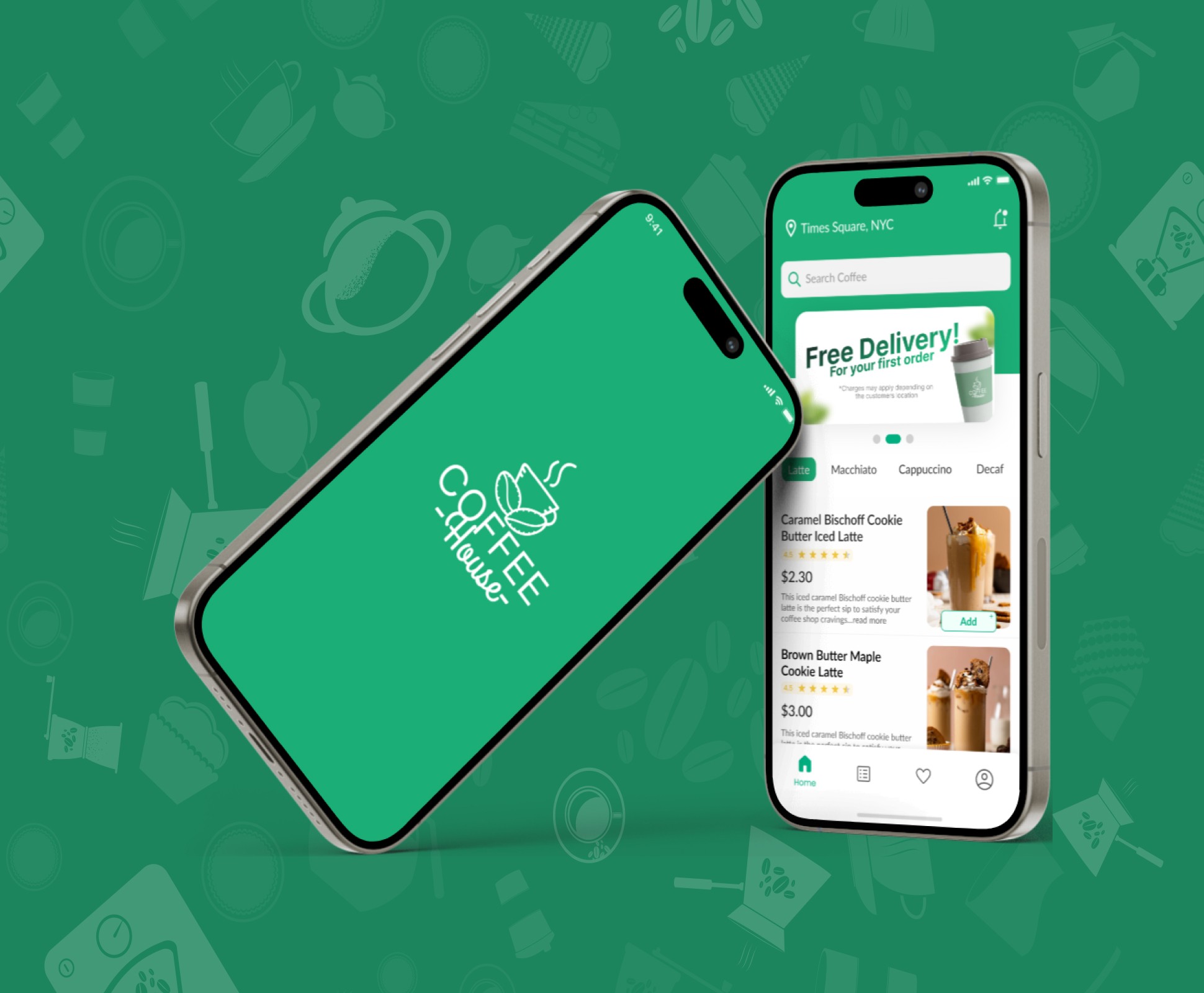
a cell phone on a bench

Design Process Followed

The project followed a user centered, iterative process to ensure every decision was grounded in real user needs.

Stage 1: Empathize

To understand user frustrations, I conducted interviews, observations, and journey mapping with frequent Coffee House customers.
Key insights revealed that users especially working professionals faced:

  • Timing uncertainty: Orders ready too early or too late.

  • Order inaccuracies: Incomplete or incorrect group orders.

  • Chaotic checkout & queues: Disrupted workflow and focus.

These findings guided the foundation for a more organized, reliable, and stress-free ordering experience.

Stage 2. Define

Using research findings, the main challenge was defined as:

“Busy professionals face interruptions and delays when ordering, leading to frustration and reduced productivity.”

Goals:

  • Enable users to order seamlessly without waiting.

  • Minimize errors and confusion during checkout.

  • Deliver a professional, predictable, and efficient experience.

The definition stage set a clear direction for both functional improvements and emotional satisfaction in the app.

Stage 3. Ideate

Explored multiple solutions through paper wireframes and brainstorming sessions.
The goal was to simplify ordering and make information easily accessible.

  • Key Ideas

    • Categorized menu & quick search for faster navigation.

    • Custom pickup scheduler for precise time coordination.

    • Real-time notifications & ETA updates to reduce uncertainty.

    • Wishlist & profile management for convenience and repeat orders.


    This stage helped identify what mattered most : control, clarity, and calm interactions.

Design Process Followed

The project followed a user centered, iterative process to ensure every decision was grounded in real user needs.

Stage 1: Empathize

To understand user frustrations, I conducted interviews, observations, and journey mapping with frequent Coffee House customers.
Key insights revealed that users especially working professionals faced:

  • Timing uncertainty: Orders ready too early or too late.

  • Order inaccuracies: Incomplete or incorrect group orders.

  • Chaotic checkout & queues: Disrupted workflow and focus.

These findings guided the foundation for a more organized, reliable, and stress-free ordering experience.

Stage 2. Define

Using research findings, the main challenge was defined as:

“Busy professionals face interruptions and delays when ordering, leading to frustration and reduced productivity.”

Goals:

  • Enable users to order seamlessly without waiting.

  • Minimize errors and confusion during checkout.

  • Deliver a professional, predictable, and efficient experience.

The definition stage set a clear direction for both functional improvements and emotional satisfaction in the app.

Stage 3. Ideate

Explored multiple solutions through paper wireframes and brainstorming sessions.
The goal was to simplify ordering and make information easily accessible.

  • Key Ideas

    • Categorized menu & quick search for faster navigation.

    • Custom pickup scheduler for precise time coordination.

    • Real-time notifications & ETA updates to reduce uncertainty.

    • Wishlist & profile management for convenience and repeat orders.


    This stage helped identify what mattered most : control, clarity, and calm interactions.

a cell phone on a bench
a cell phone on a ledge

Stage 4. Prototype

Converted concepts into digital wireframes and high-fidelity prototypes using Figma.
Focused on clear structure, minimal steps, and warm visual design.

Core Features

  • Pickup or delivery selection for flexibility.

  • Live order tracking with a progress timeline.

  • Transparent bill breakdown showing taxes and discounts.

  • Payment method preview before confirmation.

  • Custom pickup scheduling for convenience.

Animations and transitions were designed to feel smooth and reassuring, giving users a sense of flow and control.
a cell phone leaning on a ledge
a black cellphone with a white letter on it
a cell phone on a table

Stage 5. Test

Round 1 Findings

  • Users preferred bottom navigation over a hamburger menu.

  • Needed ability to remove items from wishlist.

  • Requested a sort function in past orders.

Round 2 Findings

  • Users wanted to track placed orders immediately after payment.

  • Selecting payment method during checkout improved confidence.

  • Grouping wishlist items by category made browsing faster.

Each iteration improved navigation clarity and reduced cognitive load.


Stage 6. Impact

The redesign significantly improved order reliability, satisfaction, and time efficiency.
Peer testing results showed:

  • Reduced order confusion and waiting time.

  • Positive feedback for custom pickup scheduling.

  • Strong appreciation for detailed bill breakdown and calm, structured UI.

The experience shifted from chaotic to convenient helping Coffee House stand out as both modern and user friendly.

Stage 7. Learning


This project taught me how small interaction details—like confirmation feedback, visible ETAs, and smooth motion—can create confidence in the user journey.
It also reinforced the value of testing and iteration, turning research insights into meaningful, real-world design improvements.

Stage 5. Test

Round 1 Findings

  • Users preferred bottom navigation over a hamburger menu.

  • Needed ability to remove items from wishlist.

  • Requested a sort function in past orders.

Round 2 Findings

  • Users wanted to track placed orders immediately after payment.

  • Selecting payment method during checkout improved confidence.

  • Grouping wishlist items by category made browsing faster.

Each iteration improved navigation clarity and reduced cognitive load.


Stage 6. Impact

The redesign significantly improved order reliability, satisfaction, and time efficiency.
Peer testing results showed:

  • Reduced order confusion and waiting time.

  • Positive feedback for custom pickup scheduling.

  • Strong appreciation for detailed bill breakdown and calm, structured UI.

The experience shifted from chaotic to convenient helping Coffee House stand out as both modern and user friendly.

Stage 7. Learning


This project taught me how small interaction details—like confirmation feedback, visible ETAs, and smooth motion—can create confidence in the user journey.
It also reinforced the value of testing and iteration, turning research insights into meaningful, real-world design improvements.

Other projects

Copyright 2025 by Makarand Warade

Copyright 2025 by Makarand Warade

Copyright 2025 by Makarand Warade

Create a free website with Framer, the website builder loved by startups, designers and agencies.